// Our manifesto
We like building things that last.
The web changes quickly. Technologies and tools are constantly evolving, and what seems new today can already feel outdated tomorrow.
That’s why we try not to follow every passing trend. Instead, we choose tools we know well, design with care, and develop solutions that can be maintained and updated over time.
It’s the way we’ve worked for years, and it has allowed us to support many projects throughout their evolution, updating and adapting them as new needs emerge.
How we work
Substance first.
A well-built project maintains its quality and reliability as it grows, changes and evolves. That's why we consider architecture, performance and security from the very beginning: choices that make a project more solid today and easier to evolve tomorrow.
The right tools. Known well.
We choose technologies based on what each project actually needs, and we prefer working with tools we know inside out. TYPO3 has been at the core of many of our projects for years, especially when dealing with complex structures, multiple languages, large amounts of content and platforms that need to evolve over time. Knowing the technology in depth helps us make better decisions and keep things easier to manage in the years ahead.
Design with a purpose.
For us, design starts with making it clear what a platform is meant to do. We organise content, features and user journeys, removing unnecessary complexity along the way. The goal is to create interfaces that are clear, readable and easy to use.
// Simply Us
The web is big, says the introduction to the Guide. Really big. You just won't believe how vastly, hugely, mind-bogglingly big it is, and so on. It also says that if you stuff your site with meta tags, you can survive in Google's search results for about thirty seconds.
However, the web being big, as we said, the chances of being found on Google within that time are two to the power of two billion seventy-nine million four hundred and sixty thousand three hundred and forty-seven [2079460347] to one against, which, by an extraordinary coincidence, is also the telephone number of a Bioversity office where Simone, on a rainy working day, met a very nice Valentina with a passion for design.
Bioversity later merged with CIAT, and the Maccarese office, phone and all, was destroyed.
Simone and Valentina, on the other hand, founded NewtVision.
— with apologies to Douglas Adams
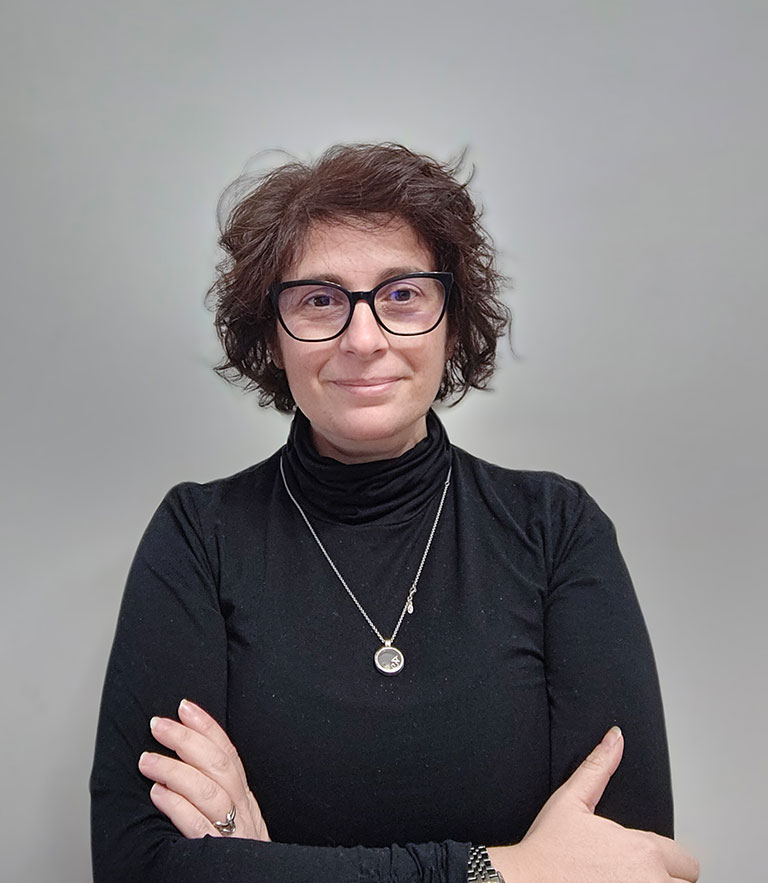
Valentina Barbiero
FOUNDER / CFO / Web Specialist / Web Designer / TYPO3 Integrator / Helpdesk
I am a Web Specialist and Web Designer, and at NewtVision I design and manage web projects from the initial idea through to launch. I work on content architecture, UX/UI, design and interface development, while also coordinating the different stages of each project and managing relationships with clients.
I have a particular passion for TYPO3, which I work with on both the backend and frontend. I handle CMS configuration, interface development and customisation, as well as the organisation of content and editorial tools. An important part of my work also involves the people who will ultimately use these systems: I prepare documentation, tutorials and training sessions for editorial teams and users, with the aim of making even fairly complex platforms simple to manage.
Much of my work comes from the intersection of design, technology and content. I like to understand what a website needs to do, who will use it and how even very complex information can be organised to make it clear and accessible.
Over the years, I have worked on a wide range of websites, platforms and projects, spanning scientific research, cultural heritage, environmental data and institutional communication. It is one of the things I appreciate most about my work: every project takes me into a new world, with its own language, people and needs to understand before I even begin designing.
I helped bring Politèia to life, a project dedicated to public engagement, civic participation and the relationship between digital culture, society and public debate.
Then there is music, cinema and writing — passions that inevitably find their way into my work and influence how I think about images, interfaces and storytelling.
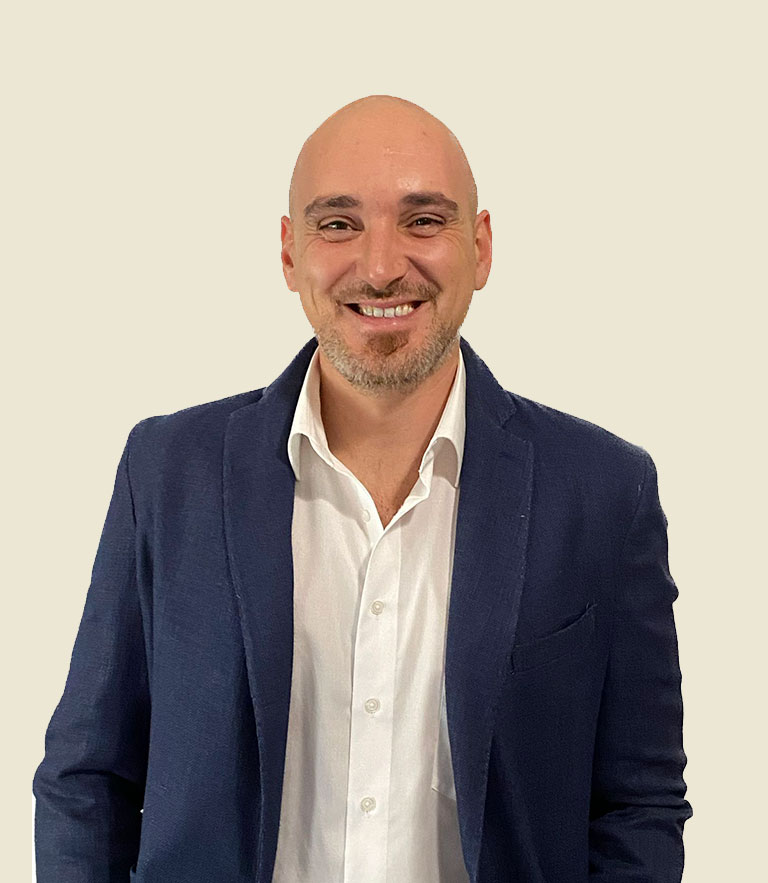
Simone Mori
FOUNDER / CTO / Project Manager / Web Developer / Database e GIS Expert
I graduated in Computer Science in 2009, but my journey into the world of research began a year earlier, during my thesis internship at Bioversity International.
I still remember my first day: I walked in and was pretty much thrown into a room with three Senior Scientists and told to take notes. Not a bad way to start.
That experience also led to the first major project I worked on, Crop Wild Relatives, dedicated to the conservation of wild species related to cultivated plants. At the time, I could never have imagined how much that world would shape my professional journey in the years to come.
Since I started down this path, not a single day has gone by without me learning something. That is not just something I say: it is probably what I still enjoy most about this life. Every project brings a problem I have never faced before, a technology to understand, a person to listen to or, very often, an entire field I initially know very little about.
NewtVision was born in 2011. Since then, through ups and downs, straightforward projects and others that were anything but, we are still here. Designing, developing, solving problems and, when necessary, starting again from scratch.
At NewtVision, I work on software development and system architecture, although over the years my role has become difficult to fit into a single definition. I work with web applications, databases, information systems, geospatial data, integrations, servers, networking and infrastructure. I like being able to understand a system as a whole, from what happens on the machine running it all the way to the interface people actually use.
An essential part of my experience, however, has been built away from my desk.
I have been fortunate enough to travel extensively, both within Europe and beyond, and to work directly with researchers, geneticists, biologists, agronomists, National Coordinators and Focal Points. I have worked in the field, seen how data is collected and met the people who produce, study and use that data.
This has profoundly changed the way I think about technology. Behind a single row in a database there might be a tree in a forest, a sample collected on the other side of the world, years of observations or the work of people who have dedicated their lives to studying something. Once you understand that, the way you design a system changes too.
That is why I believe technical expertise alone is not enough. Experience also grows out of curiosity and creativity: the desire to ask questions, to understand what you do not yet know and to explore different paths when the most obvious one does not work.
Perhaps that is why problem solving is still the part of my work I enjoy the most. I like difficult problems, especially the ones that do not come with a ready-made solution. I can go from designing the architecture of a platform to figuring out why two systems refuse to talk to each other, integrating completely different datasets, or trying to convince a server that, yes, today it really does need to work.
I am a naturally cheerful person. I like to laugh, enjoy being around people and try not to take myself too seriously, even when I take what I do very seriously. I believe that working well also means feeling good while you work and building relationships that go beyond a list of tasks to complete.
Outside work, there is first and foremost my family and my two children, who are probably my most effective daily school of problem solving.
Then there is music, photography and chess. What I particularly enjoy is solving problems: looking for a combination, setting aside the apparently obvious solution and keeping at it until I can finally see what I was missing before. In the end, it is a way of thinking I know pretty well.
I like to think that experience is not simply the sum of the years we have spent doing something. It is everything those years have left with us: the people we have met, the discoveries, the losses, the places we have been, the mistakes, the insights, what we have learned and even the ideas we have changed along the way.
I believe that every experience, however small, changes us a little. Even stopping to write these words has made me look back and understand something more about myself.
And tomorrow, I will probably learn something else.
OK, but what does that actually look like?
So far, we've told you who we are and how we work. The best way to understand what we can actually do is to take a look at some of the projects we've worked on.